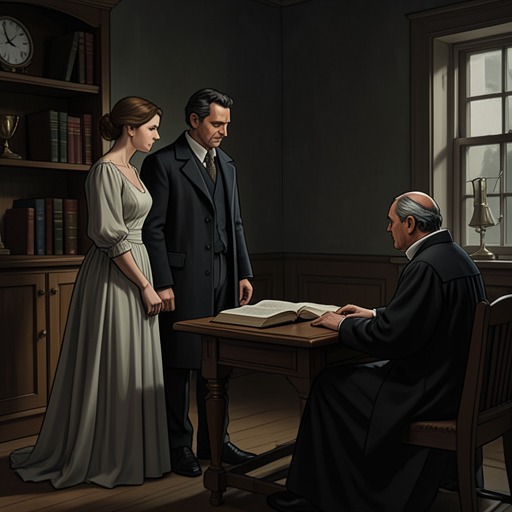
Miguel Páramo Dies in a Fall from His Horse
Pedro PáramoMiguel Páramo Dies in a Fall from His Horse is presented both as a fatal riding accident and as a death that Miguel himself seems not to recognize. In Eduviges Dyada’s recollection, he visits her after his death, puzzled that he cannot find Contla; by morning, a servant confirms he is dead. The horse’s restless return, a report of its dangerous flight, and the later handling of Miguel’s body connect a private ghostly encounter to the estate’s public recognition of the loss.
Causes and Background
Miguel regularly rode to Contla to visit the young woman he was courting. He left early and ordinarily returned late, after daylight. Eduviges knew this routine, and she also remembered a previous period when Miguel spent nights at her house. He stopped doing so after meeting the woman who captured his attention. His nighttime appearance at Eduviges’s window therefore brings together his former intimacy with her and the new attachment that had drawn him away.
The ride had a known danger. Eduviges reminded Miguel that people had warned him his horse would one day kill him. Miguel described taking a shortcut: his father had recently had a low stone wall built, and Miguel urged Colorado over it to avoid the long detour required to reach the road. He said that he cleared the wall and continued riding, but that afterward he saw only smoke, again and again. His account makes the attempt to save time the last concrete action he remembers before becoming lost.
The Visit to Eduviges
Eduviges introduces the episode as the beginning of her supposed sixth sense, a gift she also calls a possible curse because of the suffering it has brought her. She says she alone knew what happened on the night Miguel died. Already in bed, she heard his horse return and head toward Media Luna. The unusual hour caught her attention: Miguel was not supposed to be coming back from Contla then. Juan Preciado cannot hear the sound she claims to hear, leaving her perception unshared even as she insists the horse can be heard.
After the horse passed, Eduviges thought someone had knocked at her window. She acknowledges that the sound might have been imagination, but says something compelled her to look. Miguel was there. He explained that he could not reach Contla, though he believed the young woman still loved him. Mist, smoke, or some similar obscurity had covered the way; by his reckoning, he should already have passed the town, yet he had found no trace of it. He came to Eduviges because he believed she would understand him, whereas people in Comala would call him mad, as they had before.
Eduviges answers his confusion by telling him she believes he is dead. She connects his fate to the warning about Colorado and to the jump over the wall, then tells him to go and rest in peace. Miguel’s account does not show him recognizing the truth of her explanation; the scene ends with Eduviges closing the window after what she understands as his farewell. The encounter makes his death known to her before the estate’s messenger arrives, but it leaves the boundary between a supernatural visitation and her troubling sixth sense unresolved.
Confirmation at Media Luna
Before dawn, a servant from Media Luna comes to summon Eduviges at Pedro Páramo’s request. The messenger reports that Miguel is dead and that Fulgor Sedano instructed him to deliver the news while crying. Eduviges already knows, but agrees to go. The servant says Miguel had been brought back less than half an hour earlier and adds that, had he been found sooner, he might perhaps have been saved. The doctor who examined him, however, judged that Miguel had been cold for a long time. The account confirms the death without making the time or possibility of rescue certain.
Colorado had returned alone, agitated enough to keep everyone awake. The servant describes the horse as neither eating nor sleeping and unable to stay still, as if it knew what had happened. He says the animal and Miguel had loved one another, and suggests the horse may be suffering more than Pedro Páramo. The horse’s behavior gives the household a visible sign of the loss, while the staged tears required of the messenger reveal how the news is being formally delivered. Eduviges’s instruction to remember to close the door as he leaves brings this extraordinary announcement back to an ordinary domestic gesture.
The Horse and the Aftermath
A woman near the village later reports seeing Miguel’s chestnut horse gallop past the crossroads of the main road and the path to Contla. She sees it fold its legs as if about to tumble, then recover without slowing. It continues with its head turned backward, appearing frightened by something left behind. Her account does not explain the fall itself, but it echoes Eduviges’s story: the horse’s passage remains bound to the route Miguel could not find and to a terror that others can witness only from outside.
The sound of the horse reaches Media Luna on the evening after Miguel’s burial, when the men have returned from the long walk to the grave and are resting. Later, someone ventures that the horse killed him. Miguel’s body is laid on the bare boards after the mattress is thrown to the floor; the carrying ropes are removed, his hands are crossed over his chest, and a black cloth covers his face. Fulgor Sedano privately observes that the corpse looks larger than Miguel had been. Pedro Páramo remains expressionless and distant, then says that he is beginning to pay and would rather the payment come early and end quickly. The death thus moves beyond the accident: the horse, the funeral, and Pedro’s response make it the first payment in a reckoning he believes has begun.